Non-terrestrial RF Channel Emulation
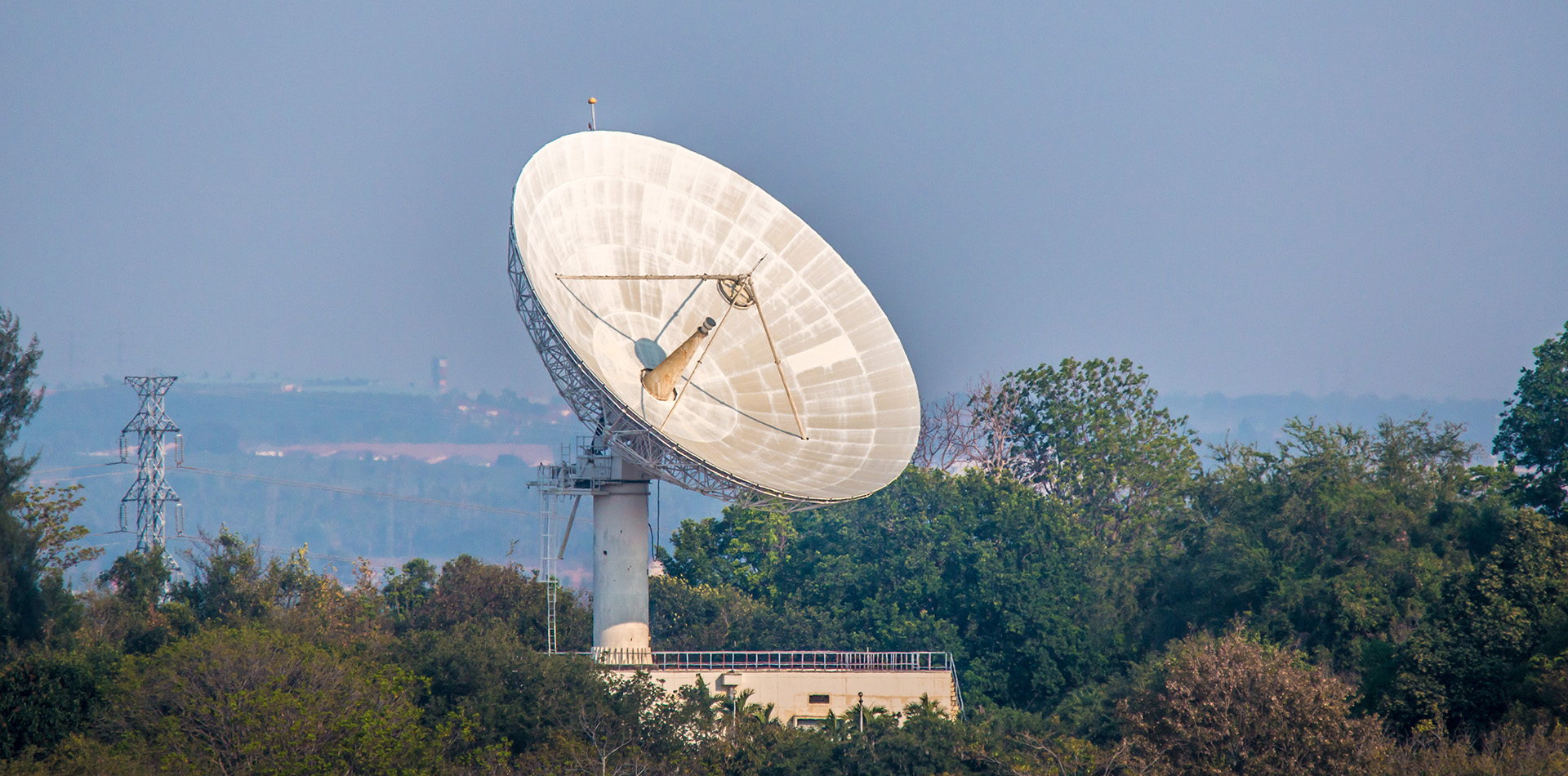
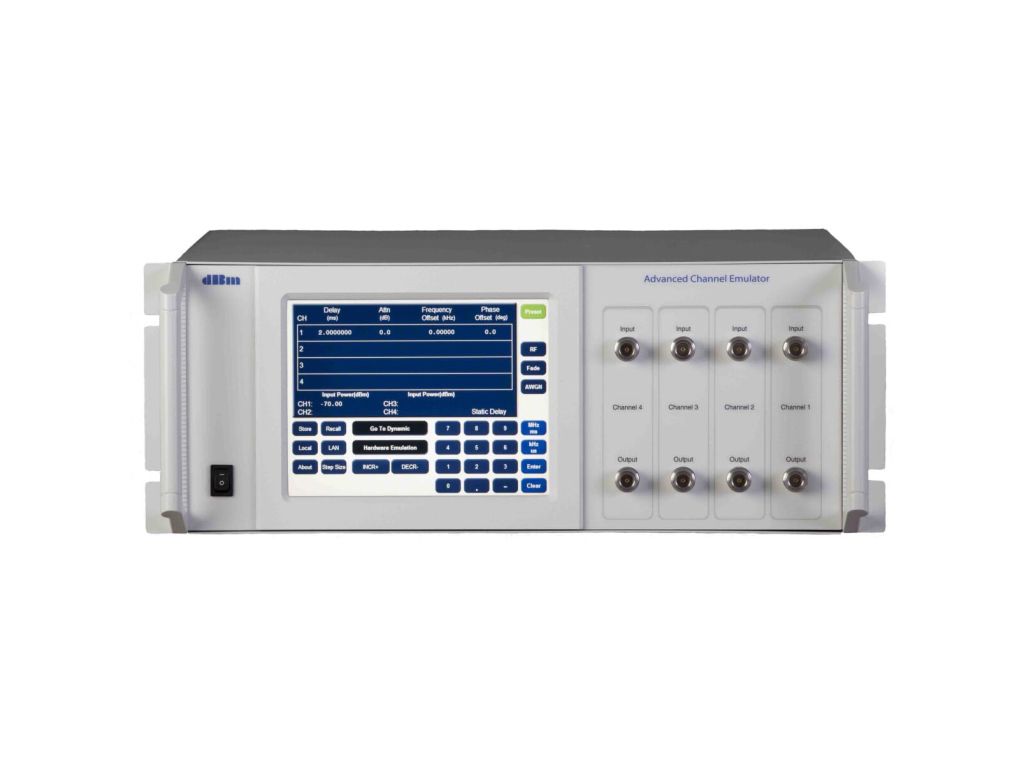
Satellite communications systems must operate in environments where Doppler shifts, delays, fading, and hardware-induced distortions all impact performance and reliability. With a waveform-agnostic design and scaling up to 16 synchronized channels, the Maury Microwave ACE9600 emulates these key impairments to test large satellite constellations and complex NTN architectures under real-world conditions.
Advanced Channel Emulation
Hardware-in-the-loop Impairments
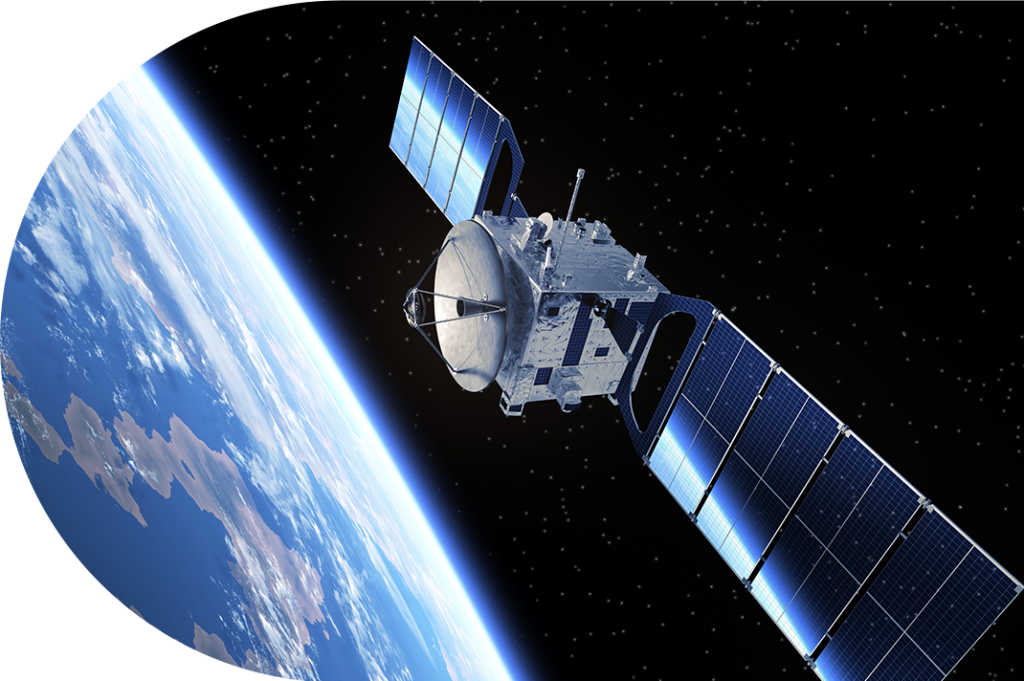
Hardware-in-the-loop (HITL) testing is critical in developing validating both satellite payloads (e.g., transponders and antennas) and ground station systems that track and monitor satellite operations and provide mission-support services. By simulation operational scenarios and applying controlled impairments. HITL emulates various from impairments to assess the reliability of ground stations and satellite payloads system in challenging post-deployment conditions.
Advanced channel emulation (ACE9600) assess performance and ensures deployment readiness by simulating hardware-induced impairments, including:
- Signal compression
- Intermodulation distortion
- AM/PM distortion
- Phase noise
- Group delay slope
- Amplitude slope
- Passband notching to simulate different countries regulatory spectrum requirements
Must-read resourceWant to Learn More?
Want to Learn More?
Read our Application Note
The Mobile User Objective System (MUOS) is the DoD’s next-generation narrowband UHF SATCOM system that uses a constellation of satellites to provide secure and reliable military communications. Operating in dynamic environments, MUOS development relies on signal-agnostic channel emulation to apply controlled impairments in a repeatable, well-defined test environment.
In this application note, learn about MUOS architecture, operational status, and how the Maury Microwave ACE9600 channel emulator enables accurate MUOS testing.
Advanced Channel Emulation
5G NTN & Satellite Link Emulation
5G NTN extends connectivity to satellites and airborne platforms where terrestrial coverage is limited. Advanced channel emulation replicates link impairments faced by 5G NTN satellite systems, aircraft, UAVs, radios, and 5G handsets to test in realistic operating conditions.
Satellites
Aircraft
UAVs
Radios
5G Handset
Whether in low-Earth orbit (LEO), medium-Earth orbit (MEO), or geostationary orbit (GEO), satellites experience specific conditions directly related to their orbital path. LEO satellites operate at high relative velocities, which cause high Doppler shift and frequent handovers. Operating at significant distances from Earth’s surface leads to long signal delays and high path loss for satellites in GEO. MEO satellites share intermediate characteristic between LEO and GEO, balancing the effects of Doppler shift, handovers, latency, and path loss. With the ACE9600, users can reproduce each satellite orbit’s unique aspects by generating time-varying propagation delay, carrier Doppler shift, attenuation, path loss, ionospheric scintillation, multipath fading, and troposcatter effects. This enables engineers to thoroughly test and optimize the performance of satellite communications systems designed for LEO, MEO, or GEO.
Civilian and military aircraft must function reliably and meet strict requirements all while operating in challenging environments. For example, traveling at fast speeds increases susceptibility to Doppler shift, varying altitudes causes dynamic delays and fluctuations in signal strength, and interference and various atmospheric effects can degrade signal quality. These conditions can significantly affect the transfer of critical, real-time data, including flight path management details, navigational instructions, immediate updates on aircraft positioning and weather, and air traffic control (ATC) information. The ACE9600 provides valuable insight into the effectiveness of aircraft communications by emulating various link impairments, such as time-varying propagation delay, Doppler shift, path loss, multipath fading, and atmospheric disturbances (i.e., ionospheric scintillation and troposcatter effects). Through aircraft link emulation, the ACE9600 ensures civilian and military aircraft meet required reliability, safety, and performance standards.
Unmanned aerial vehicles (UAVs) are dynamic airborne systems, operating at variable altitudes and speeds while establishing and maintaining communications with other aircraft or ground stations. The integrity of communications signals directly impacts a UAV’s ability to receive commands, transmit sensor data, and coordinate flight paths with nearby airborne systems, among other mission-critical tasks. Factors such as high mobility and variable flight behavior, however, presents unique challenges for UAVs to communicate and operate effectively while in the field. The ACE9600 can provide a realistic testing environment through comprehensive UAV link emulation. Simulated link impairments include carrier Doppler shift, chip rate shift, path loss, ionospheric scintillation, multipath fading, and troposcatter effects, all of which contribute to understanding, analyzing, and optimizing UAV performance under various operational conditions.
Radios are fundamental communications systems for various applications, including public safety, aviation, satellite, cellular networks, and tactical operations. Across all use-cases, challenges such as propagation delay, Doppler shift, path loss, atmospheric disturbance, and multipath fading inhibit effective transmit and receive operations. The ACE9600 enables accurate and thorough radio link emulation by generating time-varying delay, attenuation, carrier Doppler shift, phase shift, AWGN, multipath fading, and other critical impairments. Simulating various radio link effects offers insight into real-world performance while still in the lab, allowing engineers to identify potential faults and make informed adjustments to improve radio designs.
5G handsets are mobile phones or wireless devices that can connect to 5G cellular networks, which provide faster speeds, lower latency, and increased network capacity compared to previous generations. The communication link between the handset and cellular network often encounters various challenges, such as signal propagation delay, Doppler shift, chip rate shift, path loss, and multipath fading, which can affect the transmission, decoding, reception, strength, synchronization, and fidelity of 5G signals. By simulating these impairments with the ACE9600, engineers can optimize 5G handset designs to deliver reliable connectivity and performance in diverse operating environments.