

Solutions from Directed Energy to Quantum Computing
Signal generation is used in applications far and wide. Radar and digital communications systems use signal generators as a local oscillator (LO) substitute for comprehensive performance testing. Multi-channel RF signal sources with optimal channel-to-channel stability can support the growing needs of quantum computing systems. In addition, noise sources can mitigate complex challenges in optical communications and laser weapons (to learn more, read the article “Optimize the Performance of Directed Energy Weapons with Noise Signal Generation“).
Signal Generation by Application
LO Substitution, Quantum, & Directed Energy
LO Substitution
A system’s LO often introduces phase noise, especially in communications systems using higher-order modulation schemes. A constellation diagram’s symbol positions start to distort under these conditions, even crossing over adjacent decision boundaries. Oftentimes, testing an LO requires LO substitution, where a signal generator is used in its place.
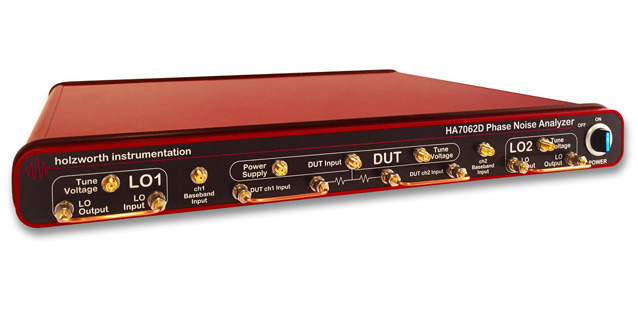
LO substitution enables engineers to:
- Uncover if performance issues are caused by the LO itself.
- Maintain the integrity of up/downconverter chain evaluation by removing LO characteristics from results.
- Test up and downconversion chains prior to availability of the system LO.
In addition to the purity of the output signal, specifications such as frequency accuracy, frequency resolution, and amplitude accuracy are important to consider when selecting a signal generator as an LO substitute.
Quantum Computing
Superconducting quantum systems use RF pulses to manipulate and control the state of qubits. These pulsed waveforms, which are generated by arbitrary waveform generators (AWG), combine with an RF sinusoidal carrier signal that has the highest level of spectral purity and stability. Key signal generation specifications for quantum computing applications include high channel density, phase coherency, and low phase noise.
High Channel Density
Phase Coherency
Low Phase Noise
Quantum systems require more RF signal sources as they add more qubits. Highest density multi-channel RF signal generations, which have multiple signal sources available in a single, saves space and optimizes performance.
Phase coherency describes the relationship between the peaks and troughs of waveforms, where signals maintain a constant relative phase with one another. Quantum systems require relative signal-to-signal phase stability in a multi-channel RF synthesizer to optimize the manipulation and communication between qubits.
Phase noise can disrupt the delicate nature of quantum computing, affecting the signal source’s frequency stability and other highly controlled elements of the system such as temperature. Utilizing RF signal sources with low phase noise creates a more stable environment to facilitate quantum communications.
Directed Energy Weapons
Directed energy weapons (DEW) emit intently focused beams of electromagnetic energy to incapacitate enemy targets.
High-energy lasers (HEL) require high power levels to operate optimally. These high power requirements, however, can cause complex challenges, such as Stimulated Brillouin Scattering (SBS). This phenomenon reflects a amount of substantial energy back toward the system that can damage laser components and limit output power.
Through coherence spreading, additive white Gaussian noise signals—whether in the lab or integrating into a production-ready system—can mitigate the effects of SBS so laser weapons can reach required power levels safely and efficiently.
Must-read resourceWant to Learn More?
Want to Learn More?
Read our Article
The article, “Optimize the Performance of Directed Energy Weapons with Noise Signal Generation,” explores how AWGN can be used to ensure directed energy weapons reach the power levels required for mission-critical operations.
Learn the power and utility of AWGN in the design and deployment of DEW, and download the article today.