

Noise and Noise Figure
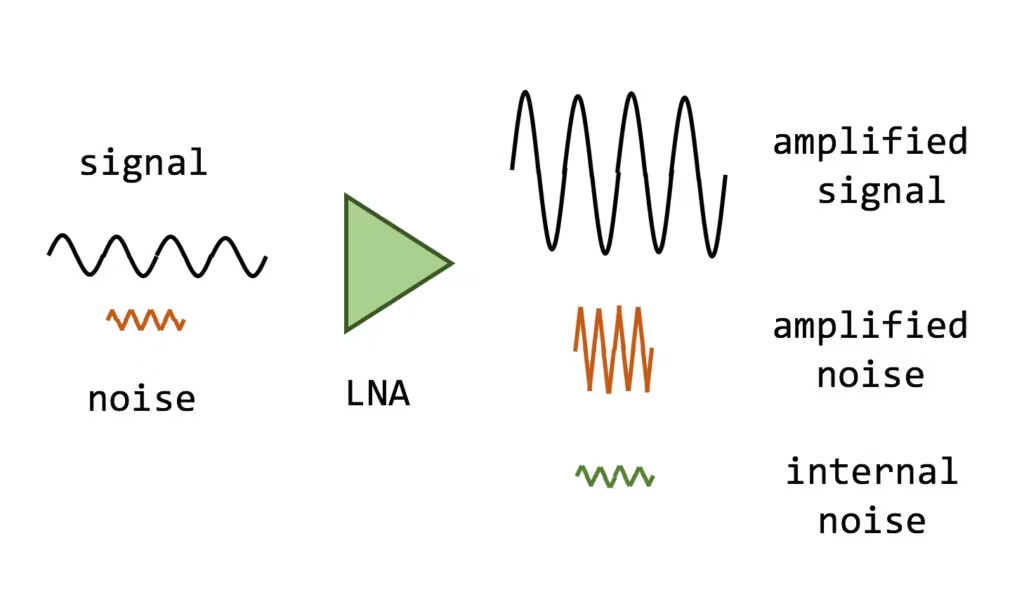
Noise occurs naturally in any active device or circuit, and limits the minimum levels of useful signals. With a cell phone, for example, it can interfere with a weak signal, and interrupt a call. Therefore, it is important to design circuits to minimize the effects of noise. To do this, the noise must be quantified and measured. The most common measure of added circuit noise is a figure-of-merit called noise figure, which quantifies the signal-to-noise degradation caused by an amplifier. While noise figure is most commonly measured in a 50-ohm environment, a device’s noise figure varies with the source impedance presented to the device. This variation can be expressed in terms of noise parameters, which are essential to know when designing low-noise amplifiers using highly mismatched devices.
Learn more about Maury solutions for noise measurements

Noise Parameters
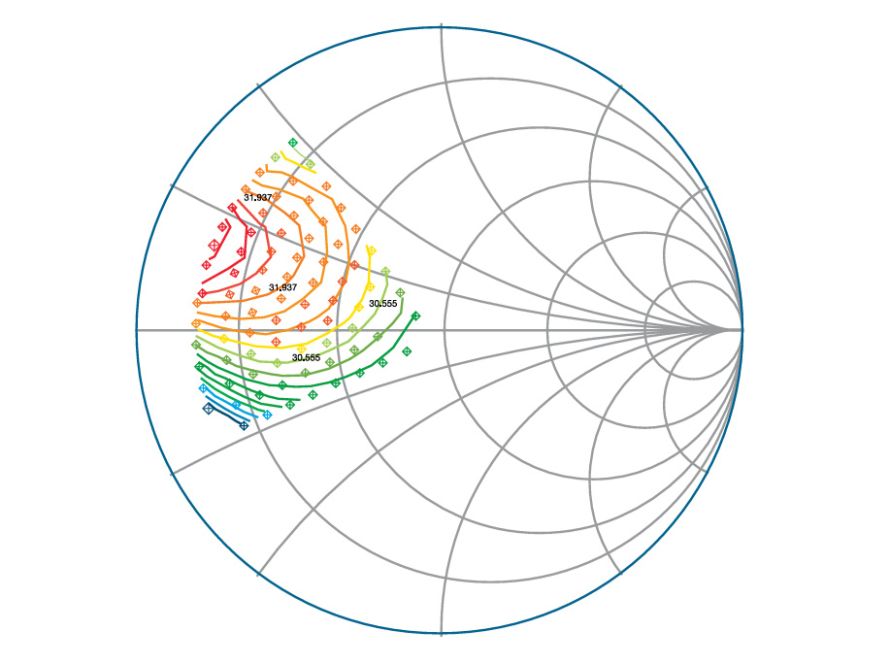
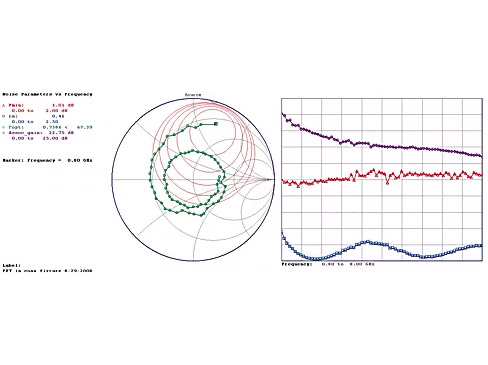
Noise Parameters are comprised of four distinct characteristics, Fmin the minimum noise figure of the transistor, Γopt the optimum impedance at which Fmin occurs (in real and imaginary), and Rn the equivalent series resistance of the transistor. In theory, any four controlled impedances Γs can be presented to the transistor and the corresponding noise figures F measured in order to satisfy equation and solve four simultaneous equations for four unknowns. Practically, the impedances selected for Γs should be in the range of Γopt.
Swept-Frequency Noise Parameters
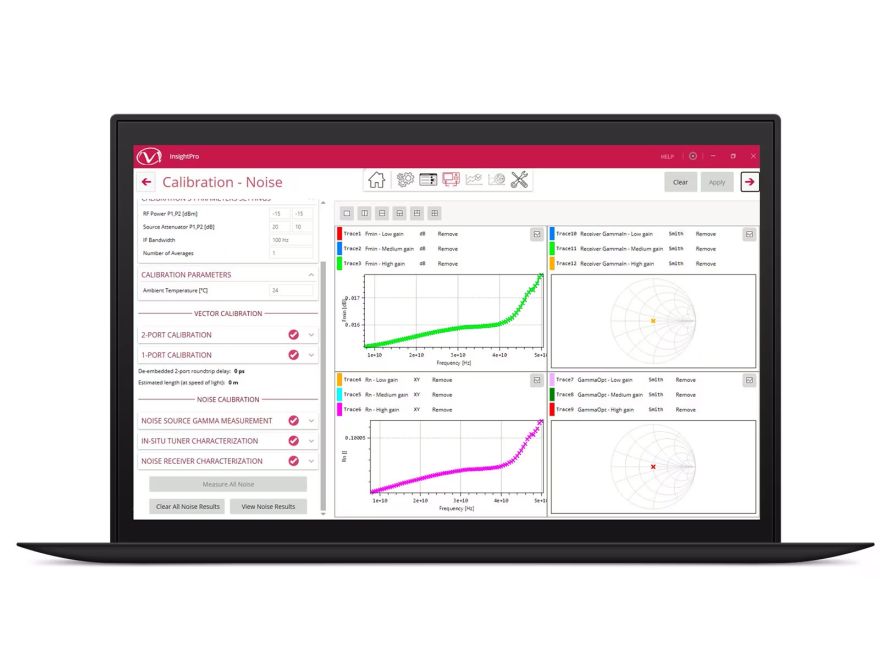
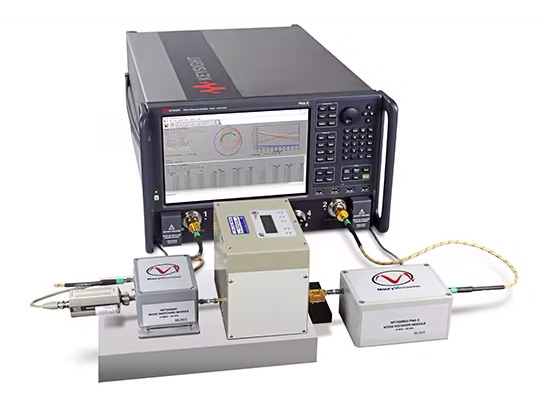
A new ultra-fast noise parameter measurement method is able to improve overall calibration and measurement time by a factor of 100X-400X, bringing measurements that could once take tens or hundreds of hours to tens of minutes. The new method has two key features that contribute to the breakthrough speed improvement: 1) The tuner is characterized with one set of states (physical tuner positions) that are selected to give a reasonable impedance spread over the frequency band of interest; and 2) the noise power measurement is swept over the frequency range at each state, so that the tuner only moves to each position once. This takes advantage of the fast sweep capability of modern instruments, as well as saving time by minimizing tuner movement.
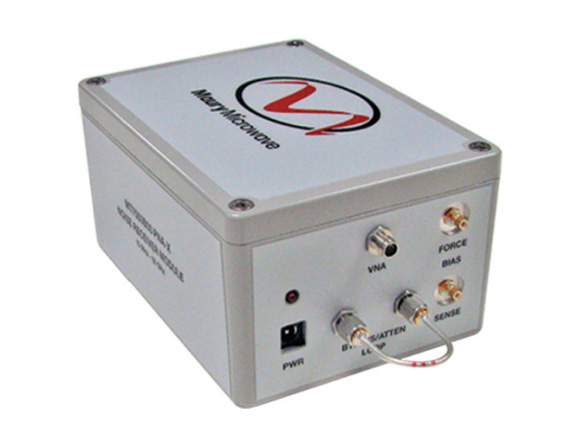
The new noise parameter measurement method provides two orders of magnitude speed improvement. It also produces data that is smoother and has less scatter than the traditional method. The fast measurement speed eliminates temperature drift, and using a VNA with an internal noise receiver simplifies the setup and makes it much more stable and consistent. The much higher speed makes it practical to always do a full in-situ calibration to minimize errors, and to measure more frequencies to get a better view of scatter and cyclical errors, and to be able to use smoothing with more confidence. The higher frequency density also enhances accuracy by reducing shifts due to aliasing.
Explore More
Related Resources
01
A New Noise Parameter Measurement Method Results in More than 100x Speed Improvement and Enhanced Measurement Accuracy
This article introduces the concept of active load pull, discuss the challenges related to performing gain compression power sweep and active load pull measurements on high-power devices at sub-THz frequencies, and then demonstrates a novel solution using high-power waveguide extender modules to overcome these challenges, compress the device under test, and extend load pull iso-contours to higher magnitudes of reflection.
03
The Impact of ENR and Coaxial Calibration in Accurate On-Wafer Noise Parameter Testing for Ultra-Low Noise Devices
This paper presents a revealing case study to explore the impact of excess noise ratio (ENR) and vector network analyzer (VNA) mechanical coaxial calibration on accurate on-wafer noise parameter testing for ultra-low noise devices.
stay informed
Latest News & Blogs
What Are High-Power Microwaves and Why Do They Matter on the Battlefield?
High power microwave (HPM) technology is an effective tool to counter hostile electronic systems quickly and precisely. In this post, we’ll explore what HPM systems are, how they work, and…
How Can Engineers Validate the Power and Precision of High-Power Microwaves?
When an electronic threat is identified, high-power microwave (HPM) pulses can be used to shut down or destroy a target’s most essential systems. Achieving this level of performance requires advanced…
Why Does Pulse Shape Matter for Radar (and How to Accurately Characterize It)?
From air traffic control operations to weather monitoring to mission-critical military applications, pulsed and pulse compression (CHIRP) radar plays a vital role in target detection and tracking applications. In this…
How Do Natural Effects & RF Impairments Impact Satellite Transmissions?
Satellite communications signals travel through environments filled with natural effects and impairments that can impact transmissions. For example, signals must contend with distortions introduced from various interfering sources. Free-space propagation…
Why Is Channel Emulation Key for Deploying 5G Non-terrestrial Networks Successfully?
Relying solely on traditional ground-based infrastructure has limitations, particularly when providing coverage to remote or underserved areas. 5G non-terrestrial networks (NTN) enhance the capabilities of terrestrial systems by integrating non-terrestrial…
Want to Optimize Satellite Communications Testing? Join Us at Booth #2112 during SATELLITE 2024
Hosted in Washington, DC, SATELLITE 2024 is a premiere conference for the global space and satellite communities to discuss the latest innovations, products, and services. In this blog post, learn what attendees can…
How Can Local Oscillators Impact the Performance of Radar and Satellite Systems?
Local oscillators (LO) are crucial components used in the upconversion and downconversion chains of radar and satellite communications systems. In this post, learn the role of the LO and how…
Why Should Directed Energy Weapons Integrate an Additive White Gaussian Noise Source?
Embedding a noise source into a laser weapon’s electronics can improve its effectiveness in neutralizing hostile targets. Want to learn how that’s possible? Available now is the Noisecom webinar, “How Can…