

S-Parameters and VNA Calibration
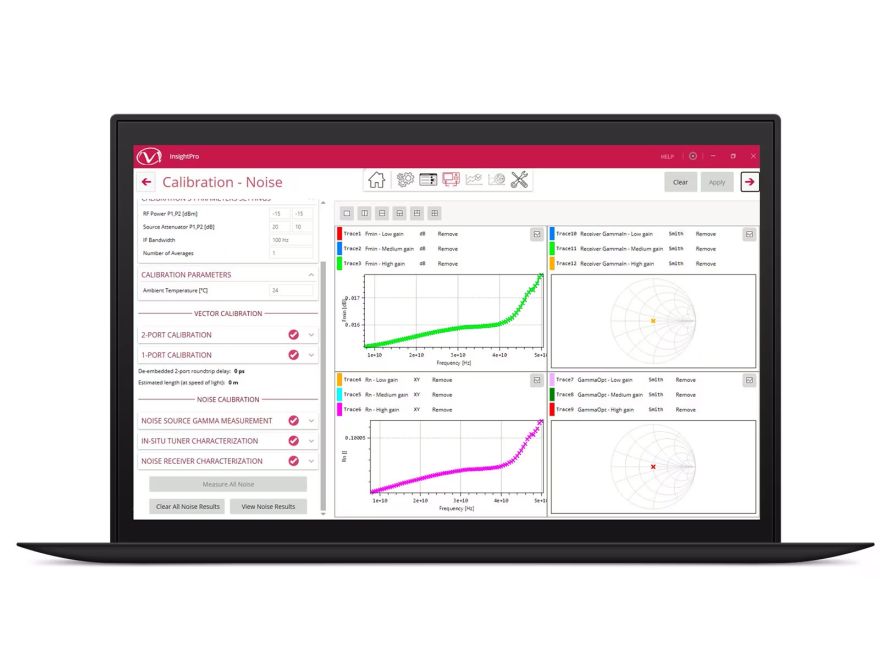
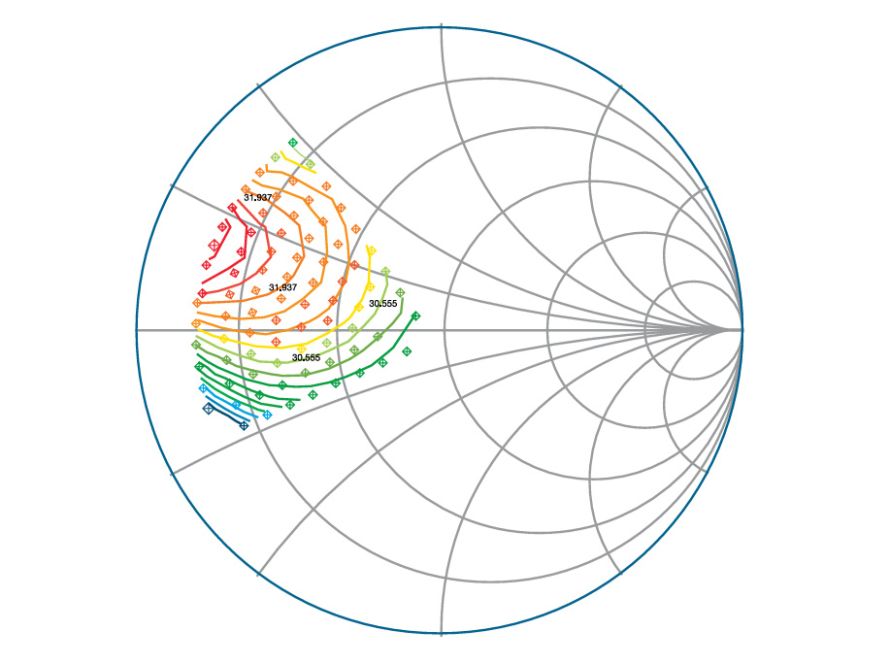
Scattering parameters, or S-parameters, quantify how electrical signals propagate through a linear network. Comprising reflection and transmission coefficients, S-parameters reveal signal behavior at ports, aiding in circuit design and analysis. They define power flow, impedance matching, and signal integrity in high-frequency applications like microwave circuits.
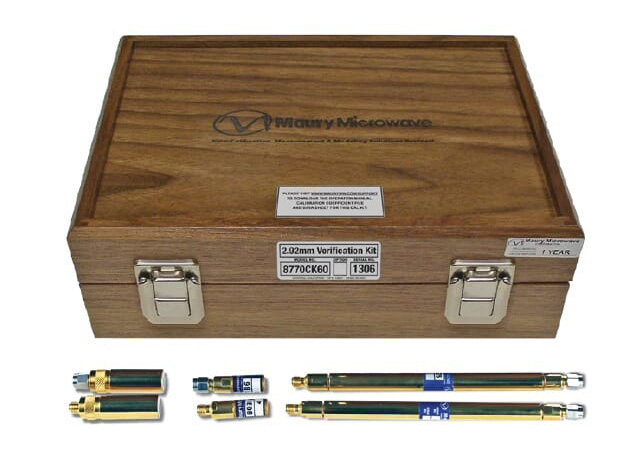
Vector Network Analyzer (VNA) calibration is a process to enhance measurement accuracy by accounting for systematic errors in the test setup. Calibration involves applying known standards, like open, short, and load, to establish reference points, compensating for cables and connectors, ensuring accurate measurements of device characteristics such as S-parameters, and improving overall measurement reliability.
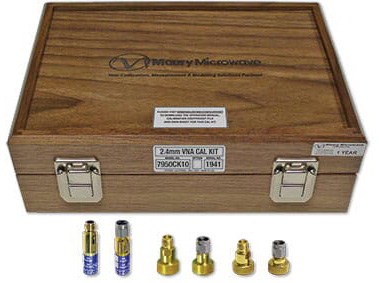
Learn more about Maury solutions for S-parameter measurements
S-Parameter Measurement Uncertainty
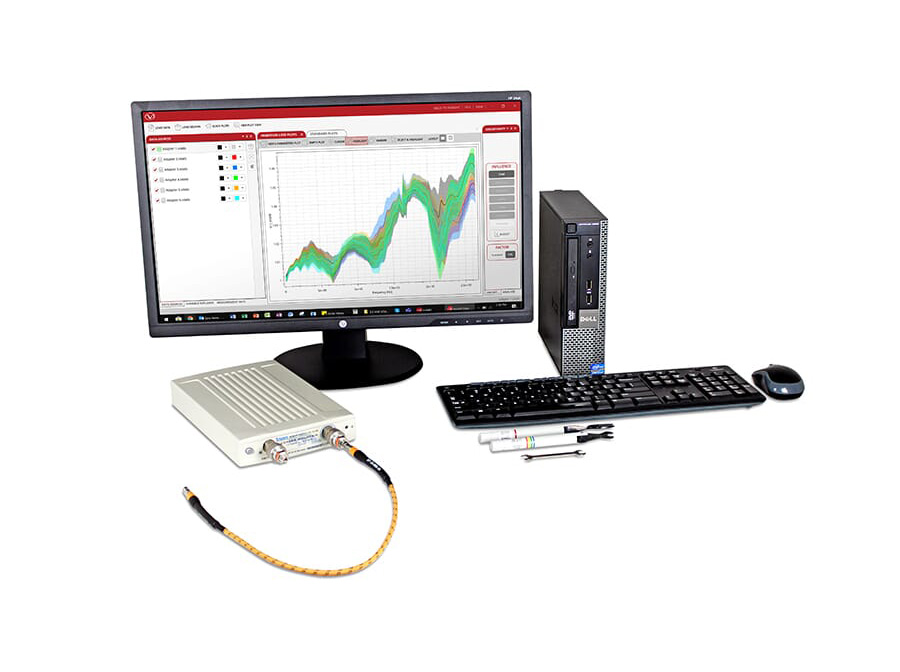
S-parameter measurement uncertainty refers to the potential errors or inaccuracies in the determination of scattering parameters (S-parameters) in a network. It encompasses factors like calibration uncertainties, environmental conditions, and equipment limitations. Understanding and quantifying these uncertainties are crucial for assessing the reliability and confidence in the measured S-parameter values, aiding accurate interpretation in fields such as RF and microwave engineering.
Through an expanded error model, the individual contributors to measurement uncertainty can be quantified and represented graphically as potential errors surrounding the measured S-parameters.


Explore More
Related Resources
01
Characterizing Uncertainty in S-Parameter Measurements
As technologies evolve and requirements become more challenging, implementing processes that increase confidence in measurements and ensure accurate and reliable characterization—and product performance—are critical. Learn how to characterize uncertainty with S-parameter measurements in this application note.
stay informed
Latest News & Blogs
What Are High-Power Microwaves and Why Do They Matter on the Battlefield?
High power microwave (HPM) technology is an effective tool to counter hostile electronic systems quickly and precisely. In this post, we’ll explore what HPM systems are, how they work, and…
How Can Engineers Validate the Power and Precision of High-Power Microwaves?
When an electronic threat is identified, high-power microwave (HPM) pulses can be used to shut down or destroy a target’s most essential systems. Achieving this level of performance requires advanced…
Why Does Pulse Shape Matter for Radar (and How to Accurately Characterize It)?
From air traffic control operations to weather monitoring to mission-critical military applications, pulsed and pulse compression (CHIRP) radar plays a vital role in target detection and tracking applications. In this…
How Do Natural Effects & RF Impairments Impact Satellite Transmissions?
Satellite communications signals travel through environments filled with natural effects and impairments that can impact transmissions. For example, signals must contend with distortions introduced from various interfering sources. Free-space propagation…
Why Is Channel Emulation Key for Deploying 5G Non-terrestrial Networks Successfully?
Relying solely on traditional ground-based infrastructure has limitations, particularly when providing coverage to remote or underserved areas. 5G non-terrestrial networks (NTN) enhance the capabilities of terrestrial systems by integrating non-terrestrial…
Want to Optimize Satellite Communications Testing? Join Us at Booth #2112 during SATELLITE 2024
Hosted in Washington, DC, SATELLITE 2024 is a premiere conference for the global space and satellite communities to discuss the latest innovations, products, and services. In this blog post, learn what attendees can…
How Can Local Oscillators Impact the Performance of Radar and Satellite Systems?
Local oscillators (LO) are crucial components used in the upconversion and downconversion chains of radar and satellite communications systems. In this post, learn the role of the LO and how…
Why Should Directed Energy Weapons Integrate an Additive White Gaussian Noise Source?
Embedding a noise source into a laser weapon’s electronics can improve its effectiveness in neutralizing hostile targets. Want to learn how that’s possible? Available now is the Noisecom webinar, “How Can…