How Can You Perform Harmonic Load Pull on High-Power GaN Devices?
September 28, 2026
Load pull allows engineers to evaluate how a device performs by varying the load impedance presented to the device under test (DUT). But what happens when a high-power GaN device is producing kilowatt power levels?
This blog explores the challenges of harmonic load pull at high power and how hybrid impedance synthesis can enable accurate, repeatable characterization while reducing active injection power requirements.
The Challenges of Harmonic Load Pull at Kilowatt Power Levels
At 1 kW, the challenge is reaching the highly reflective fundamental and harmonic impedances needed for characterization.
Purely passive load pull systems: Tuner insertion loss can limit how reflective a load the system can achieve, making it difficult to reach the extreme impedance conditions required for high-power characterization.
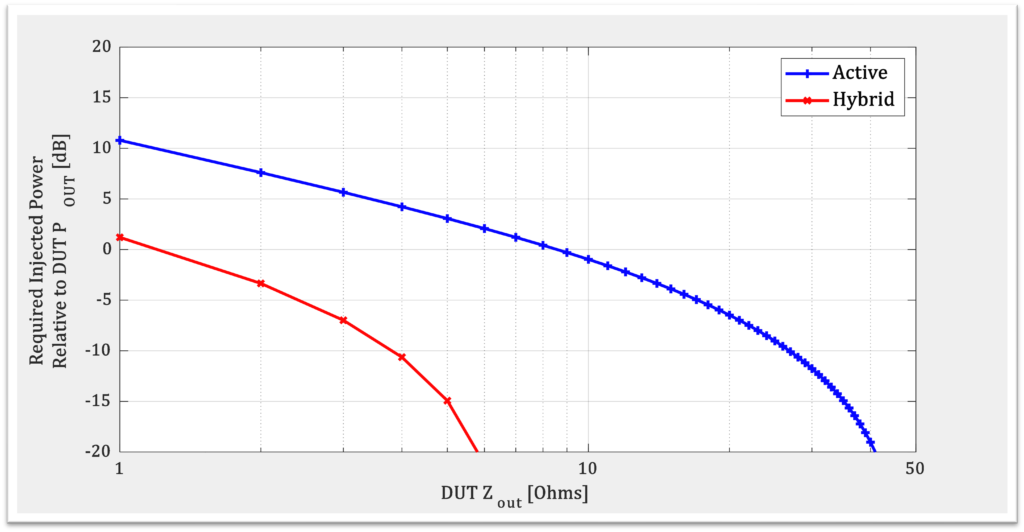
Fully active load pull systems: As DUT output impedance decreases, increasingly high levels of injected RF power may be needed to reach the desired load condition. In some cases, the required injection power can be significantly greater than the DUT output power.
Harmonic isolation: Insufficient isolation between the fundamental and harmonic frequencies can cause harmonic tuning to unintentionally change the fundamental impedance, making it difficult to determine the true impact of harmonic tuning on DUT performance.
The image below compares how much injected power is required for active-only and hybrid load pull as DUT output impedance changes. At lower output impedances, hybrid impedance synthesis requires significantly less injected power than the active-only approach to achieve the same target load.
Comparison of injected power requirements for active-only and hybrid load pull.
Hybrid Impedance Synthesis with the MT2000
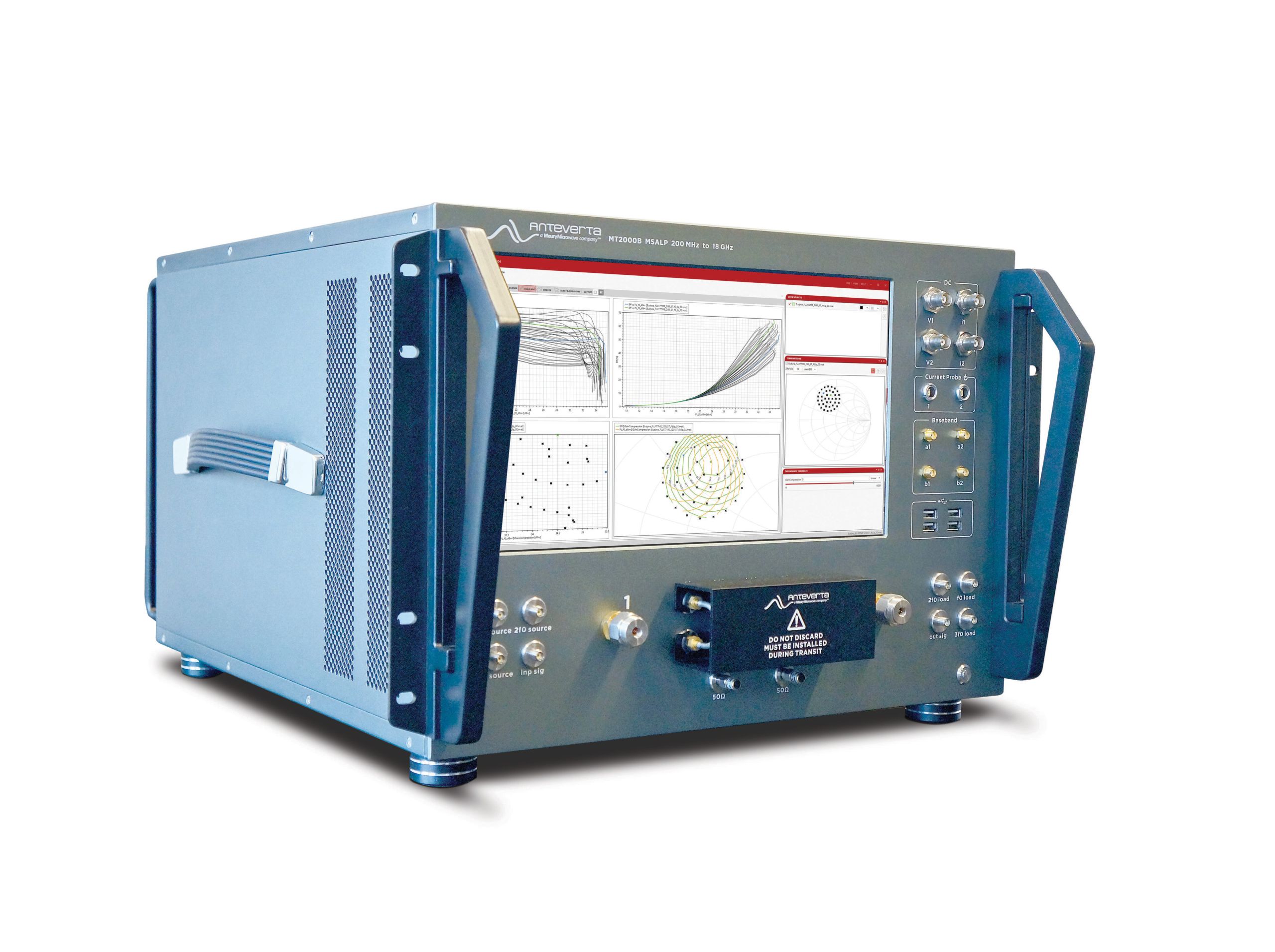
The Maury MT2000 Mixed-Signal Active Load Pull System addresses these challenges by combining passive and active impedance control to reach demanding fundamental and harmonic load conditions while reducing active injection power requirements.
Instead of relying on active injection to create the entire target load condition, passive tuning brings the load closer to the desired impedance first. Active injection then provides the remaining adjustment needed to reach the final target.
For harmonic load pull, the goal is to adjust the harmonic impedance without changing the fundamental impedance. Maintaining sufficient isolation between the two helps preserve measurement accuracy. Offering high flexibility, the MT2000 supports multiple harmonic tuning approaches, including multiplexer-based tuning that can provide effective harmonic isolation typically greater than 70 dB.
Characterizing High-Power GaN Devices
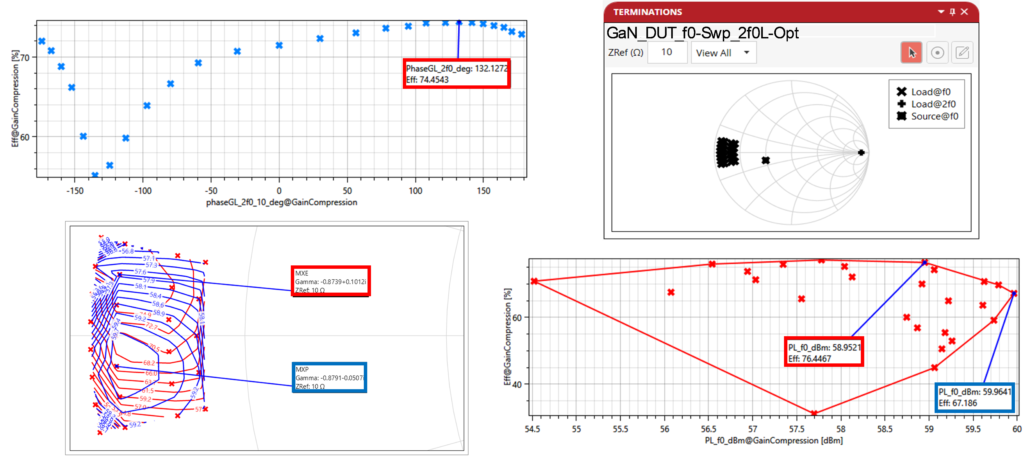
The MT2000 was used to characterize a high-power GaN device under extreme mismatch conditions, as shown in the image below. Output power levels approached 1 kW during the measurement. The plots show the load impedances presented to the DUT and the corresponding output power and efficiency as the fundamental and harmonic load conditions are varied, illustrating the impact of harmonic tuning on device performance.
Hybrid harmonic load pull measurement of a high-power GaN device approaching 1 kW output power.
Read the full application note to learn more about high-power (1 kW) harmonic load pull for GaN devices.