

Working with modulated signals
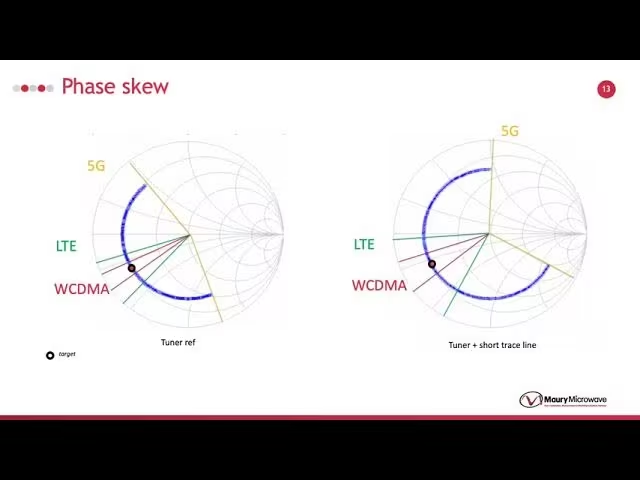
When working with modulated signals, i.e. for 4G, 5G and WLAN applications, for a well controlled linearity behavior of the DUT, the reflection coefficients offered to the DUT should ideally be constant (not vary versus frequency) within the modulation bandwidth at the fundamental, as well as in all related frequency bands at baseband and harmonic frequencies. This situation is approximated in real circuit implementations, where the matching networks are placed directly at the reference planes of the active device.
In conventional load-pull setups, however, the actual physical impedance is always located at some distance from the DUT, which is much larger than for any practical matching network. This distance, as well as any physical length within the tuning element itself (such as the position of the probe in mechanical tuners), yields very large electrical delays causing rapid phase changes of the reflection coefficients versus frequency.
Learn more about Maury solutions for wideband modulated load pull
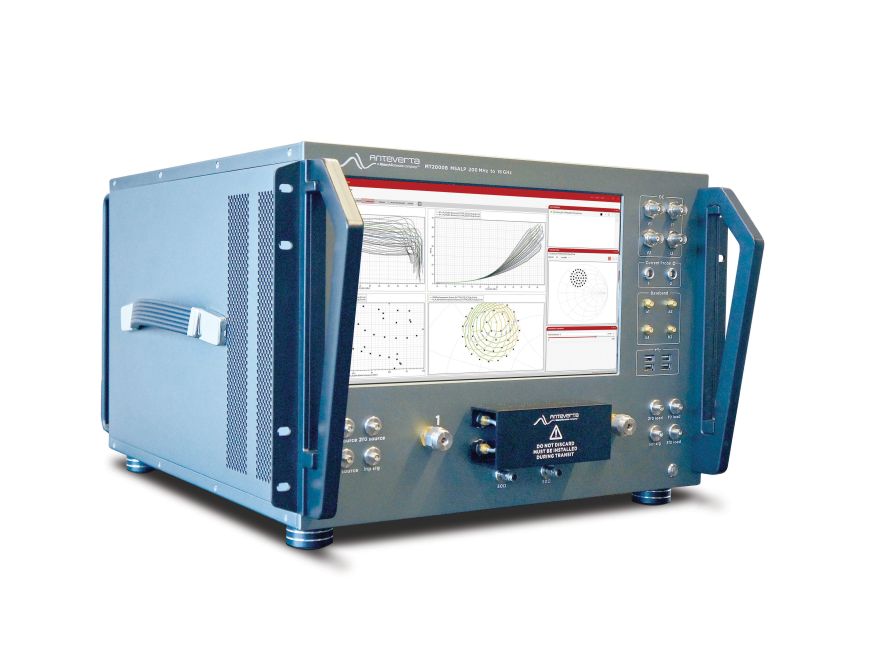

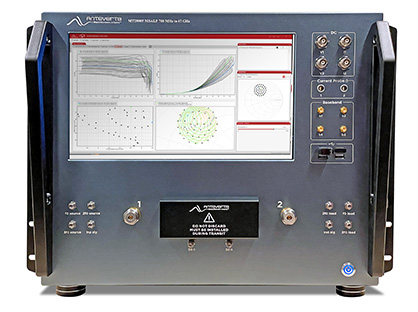
Mixed-Signal Active Load Pull
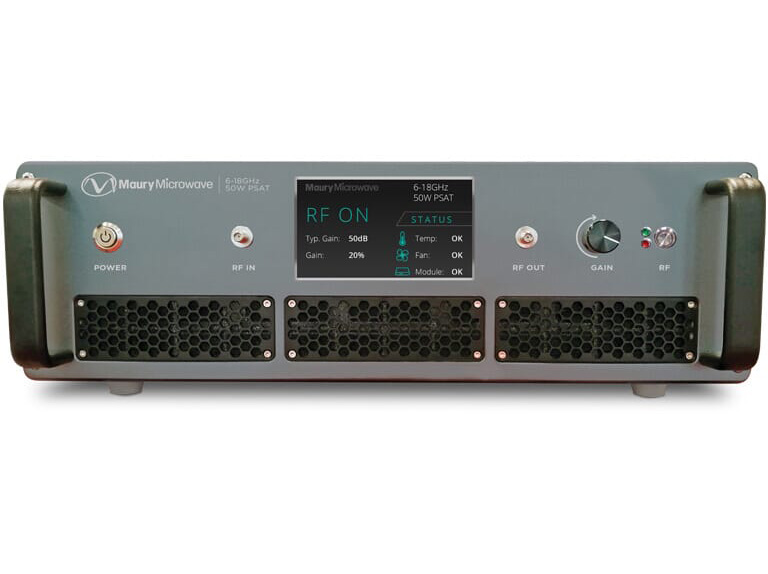
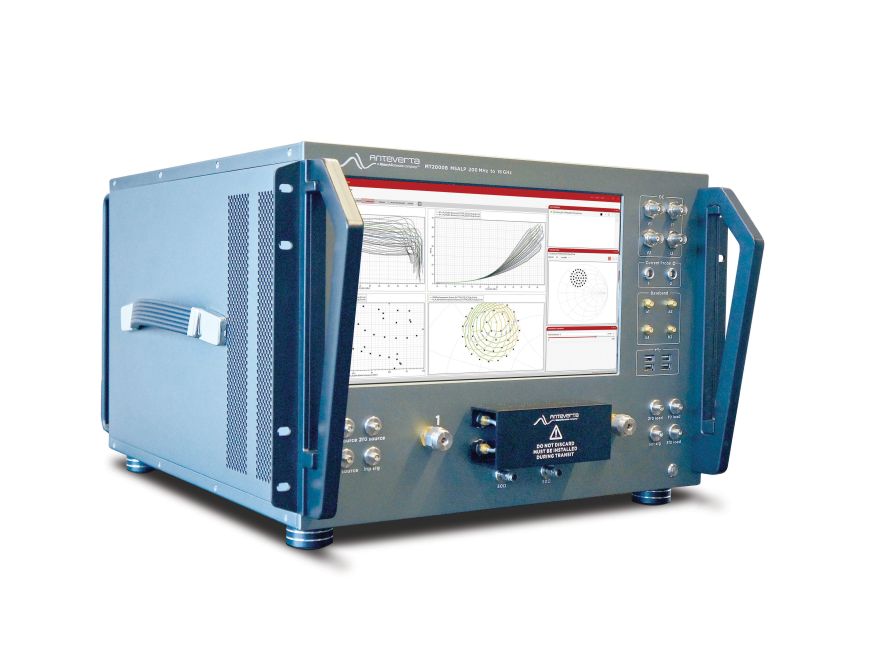
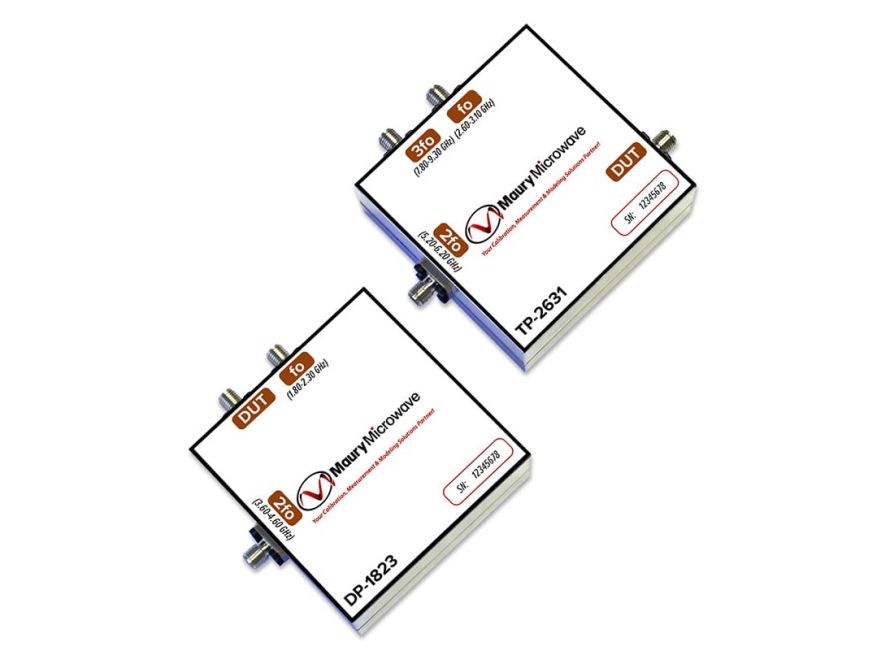
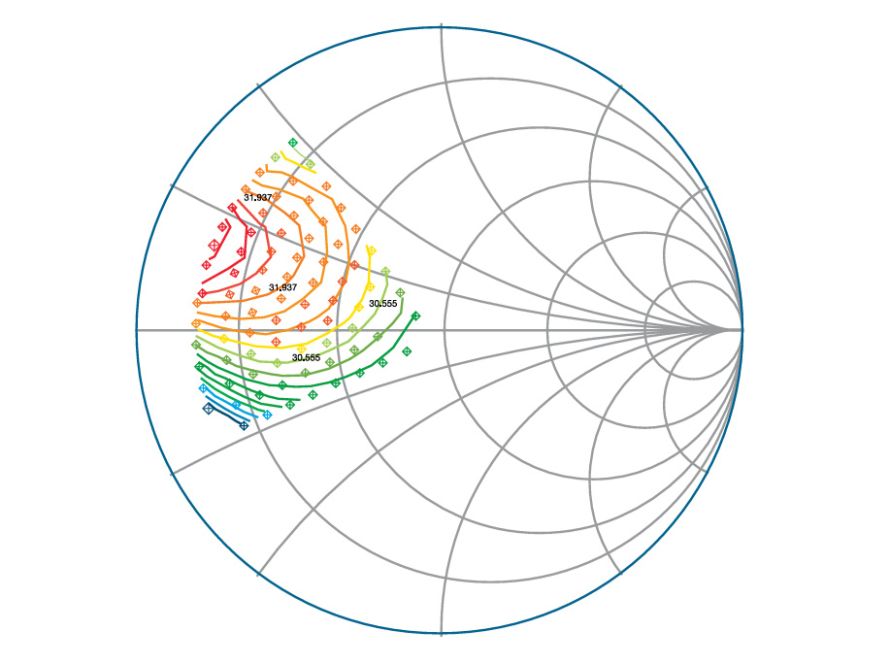
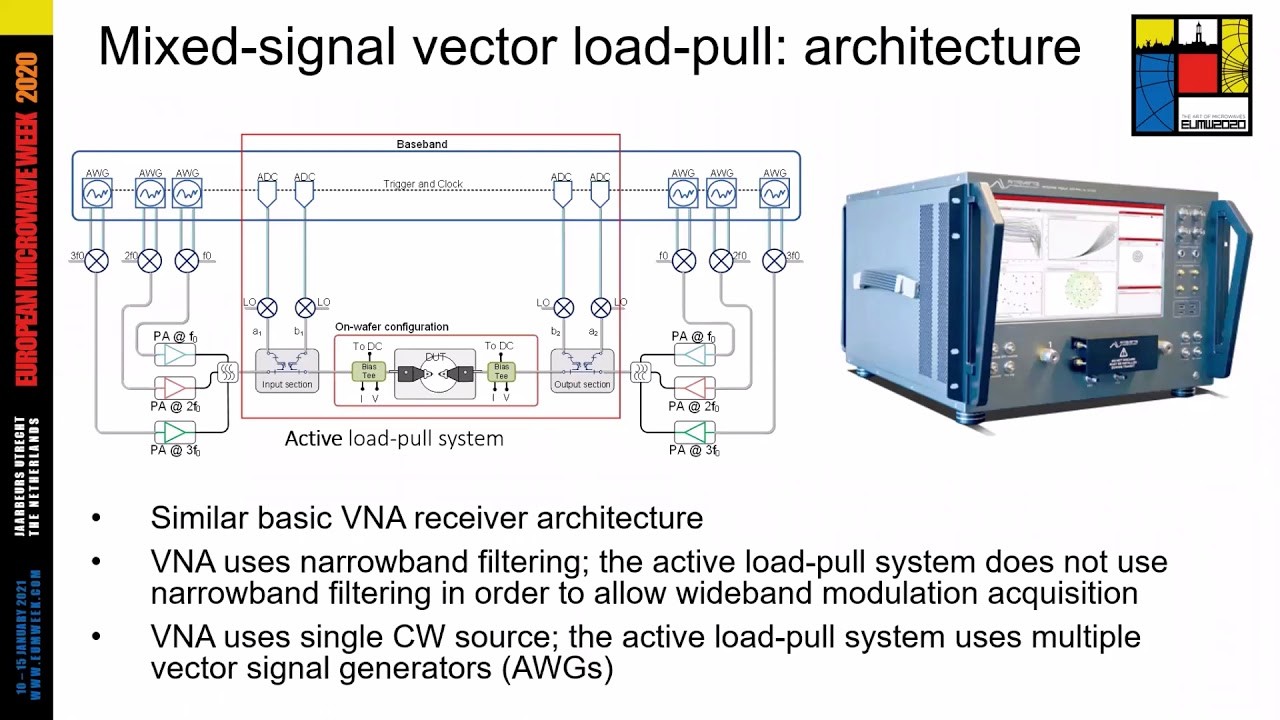
Mixed-signal active load pull is an extension of open-loop active load pull, where a new signal is created to satisfy the equation gamma=a2/b2. However instead of looking at a single frequency (or a set of harmonic frequencies), we are looking at a wideband set of frequencies covering the modulation bandwidth of a realistic communication signal. By using wideband AWG and A/D, it is possible to control the impedance presented to the DUT over a bandwidth of up to 1000 MHz. As such, active load pull can be extended to modulated signals as well as single-tone and two-tone CW and pulsed-CW signals, and can compensate for phase-delay effects introduced into measurement systems that might degrade RF performance. The wideband signal generation and analysis can also be used with single-tone signals, where the signal is divided in time, and the record which would contain the wave modulation for a single modulated impedance can contain several wave magnitudes and phases representing many single-tone impedances. In this manner, it is possible to load pull 1000 impedance/power states per minute.
Explore More
Related Resources
01
Mixed-Signal Instrumentation for Large-Signal Device Characterization and Modelling
This thesis concentrates on the development of advanced large-signal measurement and characterization tools that support transistor technology development, model extraction and validation, and design of PAs that address these new communication standards.
02
Active Harmonic Load-Pull With Realistic Wideband Communications Signals
A new wideband open-loop active harmonic load–pull measurement approach is presented. The proposed method is based on wideband data-acquisition and wideband signal-injection of the incident and device generated power waves at the frequencies of interest.
stay informed
Latest News & Blogs
What Are High-Power Microwaves and Why Do They Matter on the Battlefield?
High power microwave (HPM) technology is an effective tool to counter hostile electronic systems quickly and precisely. In this post, we’ll explore what HPM systems are, how they work, and…
How Can Engineers Validate the Power and Precision of High-Power Microwaves?
When an electronic threat is identified, high-power microwave (HPM) pulses can be used to shut down or destroy a target’s most essential systems. Achieving this level of performance requires advanced…
Why Does Pulse Shape Matter for Radar (and How to Accurately Characterize It)?
From air traffic control operations to weather monitoring to mission-critical military applications, pulsed and pulse compression (CHIRP) radar plays a vital role in target detection and tracking applications. In this…
How Do Natural Effects & RF Impairments Impact Satellite Transmissions?
Satellite communications signals travel through environments filled with natural effects and impairments that can impact transmissions. For example, signals must contend with distortions introduced from various interfering sources. Free-space propagation…
Why Is Channel Emulation Key for Deploying 5G Non-terrestrial Networks Successfully?
Relying solely on traditional ground-based infrastructure has limitations, particularly when providing coverage to remote or underserved areas. 5G non-terrestrial networks (NTN) enhance the capabilities of terrestrial systems by integrating non-terrestrial…
Want to Optimize Satellite Communications Testing? Join Us at Booth #2112 during SATELLITE 2024
Hosted in Washington, DC, SATELLITE 2024 is a premiere conference for the global space and satellite communities to discuss the latest innovations, products, and services. In this blog post, learn what attendees can…
How Can Local Oscillators Impact the Performance of Radar and Satellite Systems?
Local oscillators (LO) are crucial components used in the upconversion and downconversion chains of radar and satellite communications systems. In this post, learn the role of the LO and how…
Why Should Directed Energy Weapons Integrate an Additive White Gaussian Noise Source?
Embedding a noise source into a laser weapon’s electronics can improve its effectiveness in neutralizing hostile targets. Want to learn how that’s possible? Available now is the Noisecom webinar, “How Can…