

Measured noise floors, unparalleled analog performance, repeatable data
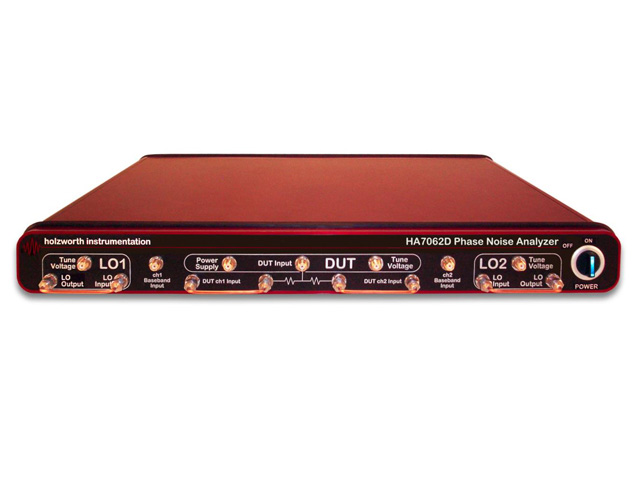
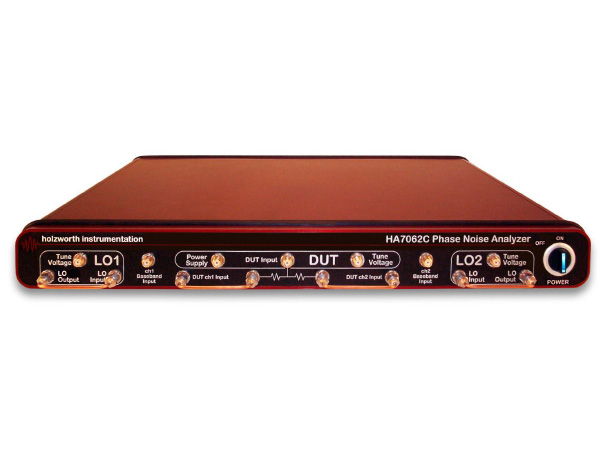
Maury phase noise analyzers are optimized with both analog and digital hardware techniques. Real-time, dual-core cross correlation engines and high performance internal LOs (i.e., Maury synthesizer modules) deliver fast, accurate measurements.
No two analyzers perform identically, underscoring the importance of understanding your instrument’s hardware limits. The reconfigurable front panel enables customs setups and the ability to measure analyzer’s own noise floor, unlike other systems that just offer an approximation.
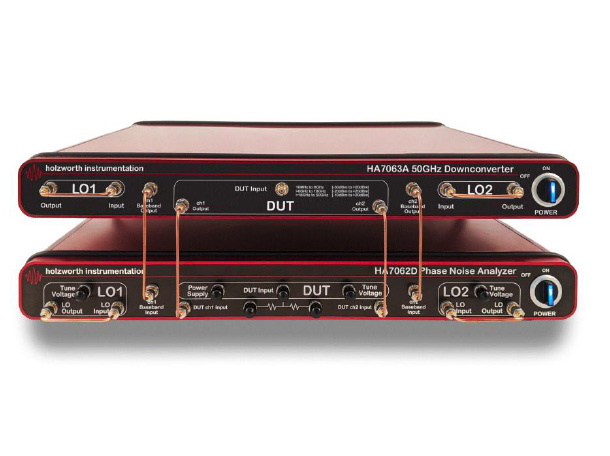
Our downconverter solution specifically addresses the measurement needs of high frequency, wide bandwidth 5G and radar applications, seamlessly integrating with our phase noise analyzers to extend the leading-edge performance up to 50 GHz.

Best in Class
We specialize in fully integrated solutions.
Explore more
Related Resources
02
Understanding Phase Noise Measurements Poster
This poster provides a clear and concise overview of key phase noise concepts, including its impact on system performance, measurement techniques, cross correlation, confidence factor vs. noise floor, and advanced analysis solutions. Explore phase noise fundamentals using this insightful visual guide.
stay informed
Latest News & Blogs
How Do You Determine Whether a Connector Is Within Tolerance?
Checking the mechanical dimensions before mating ensures all coaxial connectors in a test setup are operating within their specified tolerances. In addition to positioning and alignment, the depth of both…
How Do You Control Impedance with a Slide-Screw Tuner?
Accurately characterizing RF devices often requires testing beyond standard 50 Ω conditions, as performance depends on the impedance presented to the device. To evaluate this behavior, engineers use load pull…
How Can You Identify the Right RF Connector for Your Test Setup?
RF connectors can look similar, but not all are compatible with one another. Connector families such as SMA, 3.5 mm, and 2.92 mm, as well as 2.4 mm and 1.85…
What Causes Time-Varying Propagation Delay in Satellite Links?
Propagation delay is the time required for a signal to travel between a transmitter and receiver. In satellite systems, this delay depends on the signal path length and the speed…
Does This Connector Look Right to You? What to Check Before Use
Before putting a connector to use, a quick visual inspection can prevent costly issues. In just a few seconds, it’s possible to identify problems that impact measurement accuracy, system performance,…
How Does Doppler Shift Affect Signals During a Satellite Pass?
Non-terrestrial networks (NTN) introduce a range of impairments that must be accurately modeled during testing. One key impairment is Doppler shift. Doppler shift occurs when a transmitter and receiver move…
Recreate Real-World Satellite Conditions Without Leaving the Lab
At the Satellite & Space Summit, Dr. Zacharia Ouardirhi, Senior VP of Customer Engagement at Maury Microwave, presented “NTN in the Lab: Reproducing Real-World Satellite Impairments with Channel Emulators.” Dr.…
New StabilityPower High-power, Low-loss Cable Assemblies
Maury Microwave is pleased to announce the release of its StabilityPower (PW-series) high-power, low-loss microwave/RF cable assemblies optimized for EMC testing up to 6 GHz and 18 GHz. Designed to…